Explore our top-tier epoxy acrylates, modified oligomers, and specialty photo-curable resins engineered for ultra-fast polymerization, exceptional chemical resistance, and superior substrate adhesion.
High-Quality A Revolutionary Choice Empowering High-End UV Applications: PUA 7291B Manufacturer, Suppliers
View Product Details →
Buy 1200A UV resin in adhesion of density-board primer and metal-substrate Supplier, Suppliers
View Product Details →
High-Quality Fast-reacting 5103 polyester acrylate UV resin, very suitable for plastic coatings Manufacturer, Product
View Product Details →
Wholesale Durable 7200F polyurethane acrylate: suitable for heat-resistant and cold-resistant UV coatings Suppliers, Products
View Product Details →
High-Quality Enhance UV coating using the antifouling function of 1291B-1 Manufacturer, Products
View Product Details →
Buy Polyester Acrylate 5335F A High-Performance Solution for Offset Inks Supplier, Factory
View Product Details →
High-Quality Polyester Acrylate 5332F – The Premium Choice for Offset Inks Manufacturers, Supplier
View Product Details →
Wholesale Aromatic PA UV-resin 7162 for Plastic Spray-coatings, wood-finishes and UV-inks Supplier, Products
View Product Details →The modern photopolymerization industry demands rigorous control over chemical kinetics, double-bond conversion rates, and volumetric shrinkage. As a premier high-quality epoxy resin UV curing supplier, our chemical formulation principles bridge fundamental macromolecular synthesis with industrial-scale processing efficiency.
Epoxy acrylate oligomers cure predominantly via free-radical crosslinking triggered by Type I and Type II photoinitiators. Conversely, cycloaliphatic epoxide resins utilize cationic photoinitiators (such as diaryliodonium or triarylsulfonium salts) to eliminate oxygen inhibition, achieving near-zero volumetric shrinkage and unmatched adhesion to non-porous metallic and ceramic substrates.
Viscosity control is critical for high-speed automated coating lines. Bisphenol-A epoxy acrylates naturally display high viscosity (>20,000 mPa.s at 25°C). Through precise modification with mono-, di-, and tri-functional reactive diluents (such as TPGDA, TMPTA, or HDDA), we tune the rheological profile to maintain high double-bond conversion without compromising crosslink density.
The rigid aromatic backbone derived from bisphenol-A endows cured UV coatings with superior glass transition temperatures (Tg > 95°C), pencil hardness exceeding 4H-6H, and exceptional resistance to harsh industrial solvents, acids, and alkaline solutions, making it ideal for electronic encapsulation and protective automotive topcoats.
Traditional UV curing suffers from depth-of-cure limitations in three-dimensional, opaque, or complex geometrical assemblies where ultraviolet light cannot penetrate ("shadow areas"). Our technical formulation lab integrates secondary moisture-cure or thermal-cure functional groups into urethane and epoxy acrylate backbone matrices. Upon UV exposure, surface flash-curing occurs in milliseconds, while the secondary chemical reaction continues over 24-48 hours at ambient temperature, ensuring complete mechanical integrity throughout the entire bulk resin mass.
| Oligomer Chemistry Class | Cure Speed (m/min) | Hardness (Pencil) | Flexibility & Elongation | Adhesion Substrates | Yellowing Resistance |
|---|---|---|---|---|---|
| Standard Bisphenol-A Epoxy Acrylate | Very Fast (>45 m/min) | 5H - 6H | Low (<3%) | Wood, Metal, Glass, PCB | Moderate (Interior Use) |
| Aliphatic Polyurethane Acrylate (PUA) | Fast (25-35 m/min) | 2H - 4H | High (20% - 150%) | Plastics (PC/ABS/PET), Leather | Excellent (Outdoor Grade) |
| Polyester Acrylate Oligomer | Moderate to Fast | HB - 2H | Moderate (5% - 15%) | Paper, Board, Packaging Film | Good (Offset Printing) |
| Hyperbranched Acrylic UV Resin | Ultra-Fast (>60 m/min) | 4H - 6H | Low to Moderate | Metal, Plastic, Hard Coatings | High Gloss / Anti-Scratch |
Different global industrial hubs impose unique mechanical, environmental, and regulatory parameters on UV curable materials. As an internationally certified high-quality epoxy resin UV curing supplier, we engineer tailored formulations for specialized regional ecosystems.
In the high-density consumer electronics hub of Southern China, manufacturers require ultra-thin, anti-fingerprint, and scratch-resistant optical coatings for mobile display panels, camera lens modules, and micro-switch potting. Our low-yellowing aliphatic polyurethane acrylates and fast-curing epoxy acrylate primers support tact-time requirements under 3-second UV-LED curing cycles.
Automotive OEMs in Germany, Austria, and Switzerland demand zero-VOC, low-odor, and high heat-resistant UV resins for dashboard laminates, Head-Up Display (HUD) optics, and LiDAR sensor covers. Formulations using our 7200F and 7291B series withstand rigorous thermal shock testing (-40°C to +125°C) without micro-cracking or optical distortion.
Converter and printing facilities across the United States and Canada are rapidly transitioning from solvent inks to energy-efficient UV-LED printing systems. Our low-viscosity polyester acrylates (such as 5332F and 5335F) exhibit rapid pigment wetting, high ink-water balance stability, and strict compliance with indirect food contact packaging guidelines.
Securing raw material stability and consistent chemical purity is a persistent bottleneck for global formulators. Operating from Guangdong’s world-class chemical manufacturing clusters, our production framework provides robust supply chain resilience, cost efficiency, and rigorous quality control.
By establishing direct strategic sourcing and synthesis partnerships for key basic feedstocks—including Epichlorohydrin (ECH), Bisphenol-A (BPA), Acrylic Acid (AA), and Isocyanates (IPDI/TDI)—we insulate downstream buyers from global raw material price volatility while ensuring uncompromised purity at the monomer level.
Every commercial production drum undergoes multi-stage analytical inspection. Gel Permeation Chromatography (GPC) verifies molecular weight distribution, High-Performance Liquid Chromatography (HPLC) checks unreacted monomer residues (<0.1%), and FTIR spectroscopy guarantees 100% functional group consistency from batch to batch.
Located near major international deep-water ports (Shenzhen/Guangzhou), our export operations team manages complete dangerous goods (DG) packing compliance, ISO-tank shipments, and customized drum packaging. Standard order fulfillment times are maintained under 10 business days worldwide.
The global energy transition and environmental regulations are driving rapid paradigm shifts in UV curable materials. Our R&D engineering division is actively pursuing three core technology tracks to redefine performance standards over the next decade.
Traditional medium-pressure mercury lamps are being phased out globally due to high thermal emissions and energy consumption. We are re-engineering oligomer backbones to maximize photo-reactivity under narrow-band LED emission spectra (365nm, 385nm, 395nm), eliminating surface tackiness caused by oxygen inhibition without requiring nitrogen inerting.
Reducing carbon footprint is paramount for top-tier industrial formulators. Our chemical synthesis lab has introduced renewable carbon fractions (>45%) into epoxy and polyurethane acrylate resins utilizing cardanol, soybean oil polyols, and bio-succinic acid, delivering equivalent mechanical hardness while significantly lowering scope 3 carbon emissions.
Combining the low-VOC benefits of waterborne coatings with the instantaneous cure speed of photopolymerization, our waterborne polyurethane acrylate dispersions achieve zero monomer odor, excellent sprayability, and instant water-film evaporation, catering to luxury wood finishing and eco-friendly leather coatings.
Navigating global chemical compliance mandates requires absolute transparency. Every product shipped from our chemical synthesis facility is backed by extensive regulatory documentation and direct engineering consultation.
Our complete resin product line fully complies with EU REACH (including SVHC screening), US TSCA, China IECSC, Korea K-REACH, and Taiwan TCSI inventories. We provide comprehensive Safety Data Sheets (SDS) in GHS format across 15+ languages.
Formulations are certified free of heavy metals, halogenated solvents, phthalates, and persistent organic pollutants. Products conform strictly to EU RoHS 2.0 (Directive 2011/65/EU) and VOC restriction guidelines mandated by global environmental protection agencies.
Our senior technical services team provides customized oligomer synthesis, viscosity adjustment, and photoinitiator matching. We assist clients through pilot-scale trials, equipment line troubleshooting, and coating parameter optimization directly in your plant.
Discover specialized formulations including hyperbranched acrylics, weather-resistant polyurethane acrylates, anti-yellowing oligomers, and high-tack adhesive resins designed for challenging substrates.
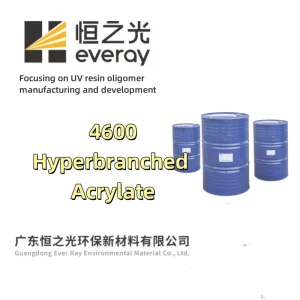
Wholesale Scratch resistant 4600 hyperbranched acrylic UV resin :suitable for varnish and ink Suppliers, Factory
View Product Details →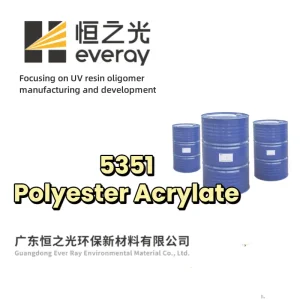
High-Quality Polyester Acrylate 5351 – The Ideal Choice for High-Performance UV Coatings and Inks Manufacturers, Products
View Product Details →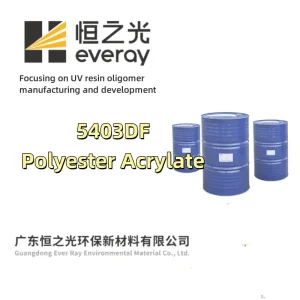
High-Quality 5403DF:Ideal polyester acrylic UV resin for UV and flexographic printing applications Supplier, Factories
View Product Details →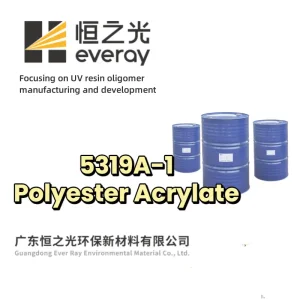
Buy Polyester Acrylate 5319A-1–A Reliable Solution for High-Performance UV Coatings Manufacturer, Products
View Product Details →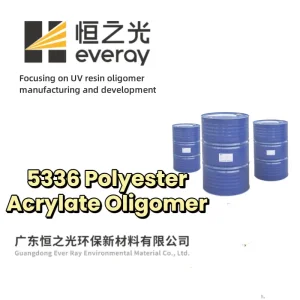
Buy Polyester Acrylate 5336 – The Ideal Resin for High-Performance UV Inks and Varnishes Supplier, Suppliers
View Product Details →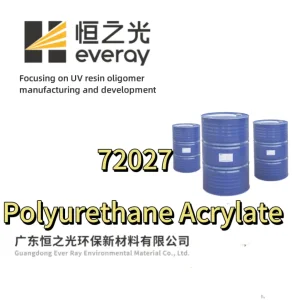
High-Quality Model 72027 Weather-Resistant Polyurethane Acrylate Resin | Low Yellowing & High Tack PSA Adhesive Oligomer for Outdoor Tapes & Labels Supplier, Product
View Product Details →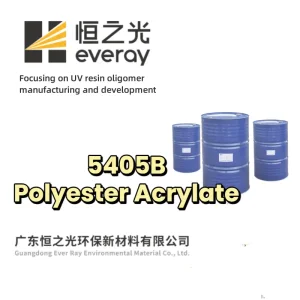
Wholesale Polyester Acrylate 5405B – A High-Efficiency Solution for Multi-Field UV Applications Manufacturers, Factory
View Product Details →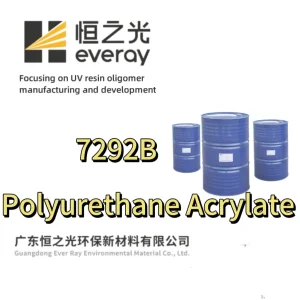
Wholesale Anti-Yellowing Polyurethane Acrylate Oligomer-High Flexibility UV Resin for Adhesive and Nail Gel Suppliers, Factories
View Product Details →Get definitive answers from our chemical engineering team on oligomer selection, formulation troubleshooting, and bulk procurement logistics.
