Explore our primary industrial-grade oligomers and specialty photopolymers engineered for superior transparency, non-yellowing durability, and ultra-fast UV LED curing kinetics.
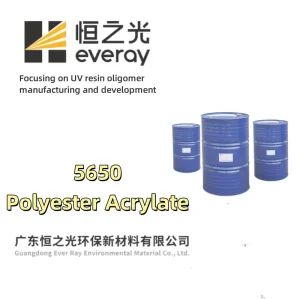
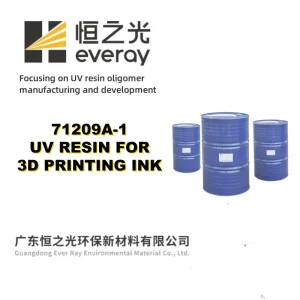
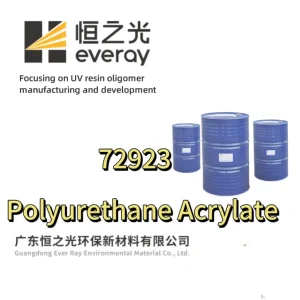
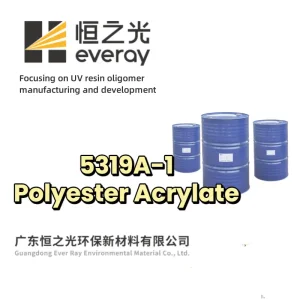
Since 2006, Guangdong Ever Ray Environmental Material Co., Ltd. (EVER RAY) has stood at the forefront of polymer synthesis, delivering high-performance UV/EB curable oligomers to global enterprise formulators. This white paper breaks down the technical parameters, molecular engineering, and procurement metrics essential for sourcing premium transparent resins.
Transparent resin systems demand strict control over oligomer molecular weight distribution ($M_w/M_n$). Excess free monomers or unreacted catalyst remnants induce post-cure hazing and color shifting. EVER RAY utilizes thin-film evaporation and specialized vacuum degassing to guarantee light transmittance exceeding 92% at 550nm wavelength.
Using cycloaliphatic and aliphatic Isophorone Diisocyanate (IPDI) backbones instead of aromatic structures (like TDI or MDI) prevents photo-oxidative quinone formation. Our aliphatic polyurethane acrylates maintain a Yellowing Index ($\Delta YI < 1.5$) even after 1,000 hours of QUV accelerated weathering testing.
Modern industrial coating and 3D printing lines are shifting from mercury lamps to UV LED arrays. EVER RAY transparent resins incorporate hydrogen-donor modified backbones and active amine synergists to bypass oxygen inhibition, ensuring tack-free surface curing at energy thresholds as low as $150\text{ mJ/cm}^2$.
The global market for optical-grade transparent resins is undergoing rapid transformation driven by consumer electronics miniaturization, digital additive manufacturing, and stringent green chemistry mandates.
Complex 3D-printed components, thick encapsulants, and shadowed automotive electronics assemblies cannot be fully penetrated by direct UV light. Dual-cure chemistry—combining primary free-radical UV polymerization with secondary moisture or thermal curing—ensures 100% conversion throughout the substrate volume without sacrificing optical clarity.
Traditional acrylic resins exhibit volumetric shrinkage between 6% and 10% during crosslinking, causing optical distortion, internal stress, and micro-cracking in transparent parts. Hyperbranched acrylate structures (such as EVER RAY 4600) compress volumetric shrinkage to below 1.5%, maintaining dimensional fidelity in high-precision lenses and light guides.
With VOC regulations tightening across North America and Europe (REACH / EPA mandates), formulators are switching from solvent-diluted oligomers to zero-VOC waterborne polyurethane acrylate dispersions. These supply crystal-clear wood and plastic topcoats with zero odor and rapid water-flashoff characteristics.
Procurement teams and chemical formulators evaluate transparent resin suppliers against rigorous physical and chemical metrics. Below is the standardized selection matrix used by tier-1 global manufacturers.
| Performance Parameter | Standard Industry Range | EVER RAY Technical Standard | End-Use Impact |
|---|---|---|---|
| Refractive Index ($n_D^{25}$) | 1.480 – 1.540 | 1.495 – 1.560 (Tenable by Grade) | Matching substrate refractive index eliminates internal light reflection in optical displays and adhesives. |
| Viscosity ($25^\circ\text{C}$, mPa·s) | 200 – 50,000 | Customizable (150 – 80,000) | Determines line processing speed, roll coating leveling, 3D printer vat fluidity, or screen printing edge stability. |
| Yellowing Index ($\Delta YI$) | < 3.0 (500h QUV) | < 1.0 – 1.5 (1000h QUV) | Guarantees long-term aesthetic clarity for automotive interior trims, solar panels, and 3C electronic housings. |
| Volumetric Shrinkage | 5.0% – 8.5% | 1.2% – 2.8% | Prevents warping in 3D-printed resins and micro-delamination in laminated glass/plastic optical bonding. |
| Glass Transition Temp ($T_g$) | -20°C to +105°C | -35°C to +130°C | Dictates thermal resistance, impact flexibility, and scratch resistance under harsh ambient operating conditions. |
| Cross-Hatch Adhesion | 3B – 4B (ASTM D3359) | 5B (PMMA, PC, PET, Glass, Metal) | Prevents coating peeling under thermal cycling, boiling water immersion, and humidity aging. |
Different manufacturing sectors demand specialized chemical architectures. EVER RAY’s portfolio covers targeted requirements across high-tech industries.
Overcoats for smart devices require ultra-high scratch resistance (pencil hardness $\ge 3H$), fingerprint resistance, and zero optical distortion. EVER RAY aliphatic polyurethane acrylates deliver crystal-clear protective layers for polycarbonate (PC) and polymethyl methacrylate (PMMA) housings with exceptional tactile feel.
From SLA/DLP photopolymer resins to LCD desktop desktop systems, clear resin clarity is paramount. Our engineering-grade transparent resins (such as 71209A-1 and dual-cure 72017A-8) combine ABS-like impact strength ($> 40\text{ J/m}$) with high optical transparency for rapid prototyping, optical light pipes, and clear footwear soles.
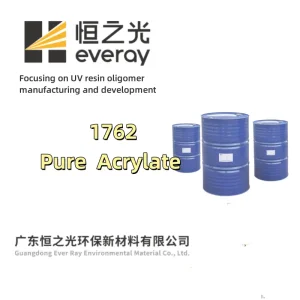
Display assembly requires bubble-free liquid optical clear adhesives that cure rapidly without yellowing under solar exposure. EVER RAY pure acrylate oligomers (such as Grade 1762) minimize curing stress, preventing display Mura effects while delivering robust moisture resistance.
Clear topcoats for premium furniture, hardwood floors, and luxury vinyl tiles (LVT/SPC) demand rapid cure speeds and chemical resistance to household solvents. Our polyester and epoxy acrylates provide mirror-like gloss finish, chemical inertness, and superior resistance to hot water staining.
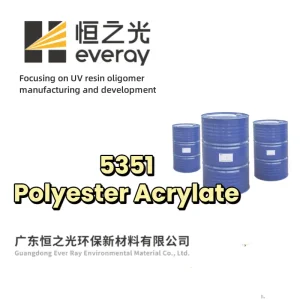
For high-speed offset, flexographic, and screen printing, transparent overprint varnishes (OPV) must exhibit low viscosity, fast surface cure, and high pigment wetting capability. Grade 6300 and 5351 oligomers ensure high gloss clarity over printed graphics without ink bleeding.
Automotive components face intense thermal cycling (-40°C to +85°C) and continuous UV exposure. Aliphatic urethane acrylate formulations prevent lens fogging, yellowing, and cracking, maintaining optical clarity across the vehicle lifecycle.
EVER RAY's synthesis laboratory continuously expands the boundary of UV curing technology. Our technical roadmap focuses on addressing fundamental polymer limitations to deliver unprecedented optical performance.
Traditional high-functionality oligomers suffer from exponential viscosity growth, requiring excessive monomer diluents that increase shrinkage and skin irritation potential. By synthesizing spherical hyperbranched acrylic architectures, EVER RAY achieves functionality $\ge 6$ while maintaining viscosity below 2,000 mPa·s at 25°C. This breakthrough dramatically elevates scratch resistance without sacrificing processing ease.
For AR/VR optical waveguides and advanced display lenses, standard acrylic refractive indices ($n_D \approx 1.49$) are insufficient. EVER RAY is developing nano-zirconia ($\text{ZrO}_2$) modified acrylate hybrids that boost the refractive index up to $n_D = 1.62$ while preserving optical transparency above 90% across the visible spectrum.
Aligned with carbon neutrality targets, our R&D team is replacing petroleum-derived polyols with bio-based succinic acid and cardanol derivatives. The next generation of EVER RAY transparent resins targets $> 45\%$ renewable carbon content while maintaining equal or superior non-yellowing performance compared to fossil-derived equivalents.
Reliable B2B chemical sourcing requires total supply chain transparency, batch-to-batch consistency, and compliance with international environmental standards.
Our production base in Dawan Industrial Park, Yunfu City spans over 40,000 square meters with 10+ automated reaction lines. Every batch undergoes Gel Permeation Chromatography (GPC) molecular weight distribution verification, UV-Vis spectrophotometer transparency validation, and cone-and-plate rheology inspection prior to shipment release.
All EVER RAY transparent resins comply fully with EU REACH, RoHS 2.0, TSCA (USA), IEC 62321 (Halogen-Free), and SVHC chemical safety standard guidelines. Full Technical Data Sheets (TDS), Safety Data Sheets (SDS), and Certificates of Analysis (COA) accompany every delivery drum.
We provide dangerous-goods certified export packaging including 20kg plastic drums, 200kg steel drums, and 1000kg IBC totes. Furthermore, our dedicated application laboratory offers technical support, sample modification, and starting formulation guidance to streamline your product development lifecycle.
Answers to common chemical formulation, storage, and application challenges faced by optical resin buyers worldwide.
Discover additional specialized polyester acrylates, epoxy acrylates, adhesives, and hyperbranched resins engineered for demanding industrial varnish and coating lines.
Partner directly with Guangdong Ever Ray Environmental Material Co., Ltd. for factory-direct chemical pricing, custom resin synthesis, and dedicated application engineering support.
