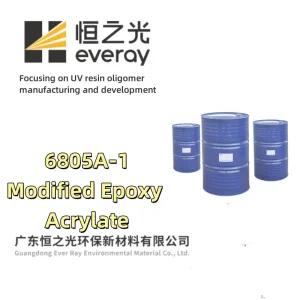
Explore our top-performing UV curable monomers, oligomers, and functional formulations engineered for high double-bond conversion, rapid line speeds, and superior substrate adhesion.
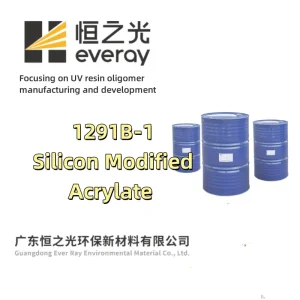
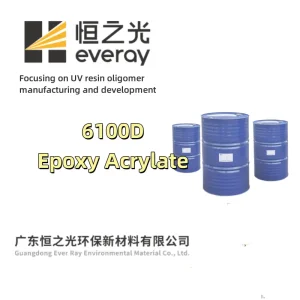
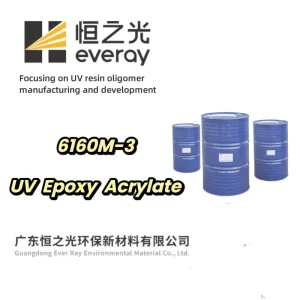
Understanding the shift toward high-efficiency UV-LED curing, zero-VOC environmental compliance, and micro-engineered acrylate oligomer chemistries.
The global market for UV curable coatings, inks, and adhesives is undergoing a fundamental technological transformation. Driven by stringent global environmental mandates such as REACH, RoHS, EPA Title V, and China's GB 38508-2020 VOC standard, industrial formulators are rapidly phasing out solvent-borne polyurethane and thermal-curing acrylic systems in favor of 100% solid-content radiation-curable polymers. Ultraviolet (UV) and Electron Beam (EB) curing technologies offer unprecedented processing speed, near-instantaneous crosslinking (typically under 0.5 seconds), minimal spatial footprint, and significant reductions in energy consumption.
At the center of this industrial revolution are primary acrylate oligomers—the foundational building blocks that dictate mechanical hardness, chemical resistance, flexibility, adhesion, and optical clarity. As leading global UV curable coatings manufacturers & suppliers, specialized chemical synthesizers in China have evolved from raw component suppliers into high-precision material solution providers, engineering bespoke molecular architectures for applications ranging from micro-electronics (3C) to heavy industrial automotive components and additive manufacturing.
Why Tier-1 international brand owners and chemical formulators partner with China-based UV resin manufacturers for scale, custom synthesis, and economic efficiency.
A chemical breakdown of acrylate resin backbones and their corresponding physical, mechanical, and curing properties under UV Mercury and UV-LED systems.
Selecting the optimal oligomer is the single most critical decision in formulating high-performance radiation-curable coatings. The backbone structure determines crosslink density, film shrinkage, glass transition temperature ($T_g$), pencil hardness, weatherability, and chemical resistance.
| Resin Chemistry | Cure Speed | Hardness ($T_g$) | Flexibility / Elongation | Weathering / Yellowing | Primary Industrial Application |
|---|---|---|---|---|---|
| Bisphenol-A Epoxy Acrylate | Ultra-Fast | High (60°C - 80°C) | Low (< 5%) | Poor (Yellows outdoor) | Wood primers, Paper OPV, Offset Inks |
| Aliphatic Polyurethane Acrylate | Medium - Fast | Tunable (-20°C to 60°C) | High (50% - 300%) | Excellent Non-Yellowing | 3C Electronics, Automotive Topcoats, Nail Gel |
| Aromatic Polyurethane Acrylate | Fast | High (40°C - 70°C) | Moderate (10% - 40%) | Moderate (Interior only) | SPC Floor Coatings, Leather, Industrial Plastic |
| Polyester Acrylate Oligomer | Fast | Moderate (10°C - 40°C) | Good Pigment Wetting | Fair | Screen Printing Inks, Lithographic Inks |
| Hyperbranched Acrylate | Extreme | Ultra-High (> 90°C) | Ultra-Low (< 2%) | Good | Anti-Scratch Clearcoats, 3D Printing Resins |
Formulation Insight — Oxygen Inhibition Mitigation: In thin-film UV coatings (< 15 microns), oxygen inhibition at the film surface often causes surface tackiness. Incorporating Amino Acrylate Oligomers or Active Amine Synergists transfers hydrogen atoms to peroxy radicals, forming active aminoalkyl radicals that continue free-radical polymerization even in ambient air environments.
Tailored chemical solutions addressing specialized performance demands across consumer electronics, industrial flooring, graphic arts, and additive manufacturing.
How leading industrial buyers audit chemical suppliers to ensure long-term batch consistency, regulatory compliance, and supply chain security.
For international procurement directors, technical sourcing managers, and R&D chemists, qualifying a new UV resin manufacturer requires rigorous verification beyond product data sheets (TDS). Quality assurance protocols must guarantee batch-to-batch repeatability across thousands of metric tons per annum.
Exploring bio-renewable acrylated resins, waterborne UV dispersions (PUDs), and deep-cure 395nm wavelength optimization.
The radiation curing industry is rapidly transitioning toward sustainability and energy efficiency. Key technology drivers shaping the next decade include:
Incorporating renewable plant oils (soybean oil acrylates, cardanol derivatives, and bio-based polyols) into the acrylate backbone to achieve up to 60% bio-renewable carbon content without sacrificing cure speed or hardness.
Combining the eco-friendliness of water-based systems with the rapid cure and superior physical resistance of UV resins. Ideal for zero-VOC wood coatings, automotive interiors, and flexible leather finishes.
Replacing traditional medium-pressure mercury lamps with energy-saving UV-LED systems requires custom-synthesized oligomers tailored to cure under longer UV-A wavelengths, reducing energy draw by up to 70%.
Explore our extended industrial range including dual-curing resins, glass primers, anti-yellowing adhesives, and texture-effect oligomers.
Expert technical responses to common questions regarding oligomer selection, UV-LED compatibility, customs clearance, and sample evaluations.