Explore our high-performance UV curable resins formulated for automotive, electronics, wood coatings, and specialized optical applications.
In modern radiation curing technology, choosing the right resin backbone dictates the thermal, optical, and mechanical ceiling of the final coating. While aromatic polyurethane acrylates (typically derived from TDI or MDI) provide rapid cure speed and cost advantages, they suffer from severe photo-oxidation when exposed to solar ultraviolet radiation. Sunlight breaks down aromatic ring structures, leading to radical formation, severe yellowing, micro-cracking, and gloss loss.
As a premier wholesale aliphatic urethanes manufacturer, Guangdong Ever Ray Environmental Material Co., Ltd. (EVER RAY) synthesizes aliphatic polyurethane acrylate (PUA) oligomers utilizing saturated cycloaliphatic or linear aliphatic diisocyanates—primarily Isophorone Diisocyanate (IPDI), Hexamethylene Diisocyanate (HDI), and Hydrogenated MDI (H12MDI). Because these molecules contain no aromatic rings, they exhibit near-zero spectral absorption in the solar UV-A and UV-B regions, providing permanent optical clarity and non-yellowing longevity under aggressive outdoor exposure.
IPDI's asymmetric ring structure delivers an ideal compromise between steric hindrance, mechanical stiffness, and glass transition temperature (Tg). It imparts outstanding chemical resistance, weatherability, and hardness to 3C electronic housing coatings and automotive interiors.
The linear hexamethylene chain of HDI provides extraordinary backbone mobility and low viscosity. HDI-based aliphatic oligomers excel in flexible plastic substrates, soft-touch coatings, vacuum metallization basecoats, and high-elongation optical film adhesives.
Hydrogenated MDI combines saturated dual-ring rigidity with high hydrogen bonding density. H12MDI aliphatic urethanes deliver extreme impact strength, scratch resistance, and moisture barrier properties required in heavy-duty industrial floor topcoats.
Information Gain Key Takeaway: Unlike standard commodity suppliers who rely on simple blend formulations, EVER RAY synthesizes customized polyurethane backbones by coupling selected polycarbonate, polyester, or polyether polyols with functional hydroxyalkyl acrylates (such as HEA or HPA), ensuring optimal crosslinking density and stress relaxation during UV polymerization.
| Resin Chemistry Class | Isocyanate Type | QUV Weatherability (3000 hr ΔE) | Tensile Strength / Elongation | Yellowing Resistance | Primary Industrial Application Target |
|---|---|---|---|---|---|
| Aliphatic Polycarbonate PUA | IPDI / H12MDI | < 1.2 (Ultra Stable) | 45 MPa / 35% | Superior (5/5) | Automotive clearcoats, 3C electronic housings, medical display films |
| Aliphatic Polyester PUA | IPDI / HDI | < 2.5 (Excellent) | 30 MPa / 120% | Excellent (4.8/5) | Leather finishes, flexible packaging varnishes, TPU shoe material coatings |
| Aliphatic Polyether PUA | HDI | < 3.0 (Good) | 15 MPa / 280% | Very Good (4.5/5) | UV screen printing inks, optical adhesives, elastomeric 3D photopolymers |
| Aromatic PUA (Standard) | TDI / MDI | > 12.0 (Severe Yellowing) | 40 MPa / 15% | Poor (2.0/5) | Indoor furniture primers, paper OPV, cost-sensitive wood filler coats |
Global chemical supply chains face unpredictable price volatility, raw material shortages, and delivery bottlenecks. Formulators in Europe, the Americas, and Southeast Asia require a manufacturing partner capable of providing unyielding batch consistency, competitive factory-direct pricing, and rapid order execution.
Situated in Guangdong's chemical manufacturing hub (Yunfu Production Base & Jiangmen HQ), EVER RAY maintains direct strategic alliances with tier-1 global and domestic suppliers of IPDI, HDI, acrylic acid, and specialty polyols. By controlling esterification, prepolymerization, and acrylation processes in-house, we eliminate intermediate trader markups and cushion our international clients against chemical spot-market price spikes.
Every batch of aliphatic polyurethane acrylate is processed under DCS computer-controlled temperature and vacuum parameters. Our lab validates key metrics—Viscosity (mPa.s at 25°C), NCO content residual (<0.1%), Color (Gardner <1), and Acid Value (<2 mg KOH/g)—using Gel Permeation Chromatography (GPC), Fourier Transform Infrared Spectroscopy (FTIR), and Brookfield Viscometers before drum sealing.
Aliphatic urethanes serve as the foundational resin across diverse industries where aesthetic elegance must meet high mechanical durability. Below are real-world application setups where EVER RAY aliphatic resins solve technical formulation bottlenecks.
Smartphones, laptops, and smart wearables demand high abrasion resistance combined with pleasant tactile feedback. Formulation challenges include micro-scratching, fingerprint oils, and yellowing from sweat exposure. EVER RAY's functional aliphatic polycarbonate acrylates deliver 3H+ pencil hardness on polycarbonate (PC) and ABS substrates while passing 500+ cycles of RCS steel wool testing.
Automotive OEMs impose grueling environmental testing, including 85°C/85% RH moisture aging, solar UV exposure, and sun-screen cream resistance. Our aliphatic IPDI/H12MDI urethanes prevent delamination on PMMA, PC, and metallic surfaces while preserving crystal-clear optical transparency over a 10-year vehicle lifespan.
Luxury Vinyl Tile (LVT) and Stone Plastic Composite (SPC) flooring require matte or high-gloss UV topcoats that withstand heavy foot traffic, castor chair rolling, and cleaning solvents without cracking. EVER RAY aliphatic urethanes feature low volumetric shrinkage, preventing edge curl and ensuring permanent adhesion to rigid vinyl layers.
3D printing resins require low viscosity for rapid leveling between layer exposures, alongside high toughness and low thermal shrinkage. Our low-viscosity aliphatic urethane oligomers enable formulators to print durable engineering prototypes, flexible shoe midsoles, and biocompatible dental models without post-curing brittleness.
Coating plastic films like PET, TAC, or COP requires ultra-low shrink stress to prevent film curling or rainbow patterns (birefringence). EVER RAY supplies specialized low-refractive-index aliphatic acrylates that preserve optical clarity and flexibility during roll-to-roll UV curing lines.
Cosmetics demand zero skin irritation, low odor, fast LED-UV curing (365–405 nm), and easy soak-off removal. EVER RAY manufactures purified, low-monomer aliphatic urethane acrylates tailored for base gel flexibility, color coat pigment dispersion, and high-gloss non-wipe topcoats.
As global environmental regulations tighten and green chemistry initiatives accelerate, the UV/EB curing industry is undergoing radical technological shifts. EVER RAY's R&D department is pioneering four key technological frontiers to meet future industrial demands.
Synthesizing aliphatic polyurethane acrylates using 30% to 70% renewable bio-based polyols derived from castor oil, succinic acid, and natural fatty acids to drastically lower carbon footprints without sacrificing mechanical performance.
Engineering molecular structures with self-initiating or hydrogen-abstracting amine motifs to overcome oxygen inhibition under low-energy LED-UV lamps (365nm / 385nm / 395nm), eliminating traditional mercury bulb energy costs.
Developing zero-VOC, water-dilutable aliphatic polyurethane acrylate dispersions that combine the eco-friendly benefits of waterborne coatings with the instantaneous cure speed and hardness of energy-curable chemistry.
Designing hyperbranched 6-to-12 functional aliphatic oligomers that feature extremely low viscosity. This reduces or eliminates the need for reactive monomer diluents, minimizing skin irritation and VOC emissions.
Exporting industrial chemical materials internationally requires rigorous adherence to regional environmental and chemical safety regulations. EVER RAY provides a complete regulatory and logistical framework to streamline procurement for global chemical formulators and distributors.
All EVER RAY aliphatic urethane grades comply fully with EU REACH regulations, RoHS 3.0, US TSCA, and China GB/T standard limits for VOCs and hazardous heavy metals. GHS-compliant SDS and COA documents accompany every shipment.
Have a unique process window? Our synthesis team can fine-tune viscosity, double-bond functionality, diluent monomer ratio, or glass transition temperature within 48 hours to match your exact spray, roller, or inkjet dispensing equipment.
We offer robust, containerized export packaging including 20kg steel pails, 200kg iron drums, and 1000kg IBC totes with nitrogen blanketing to prevent moisture absorption and premature polymerization during ocean transit.
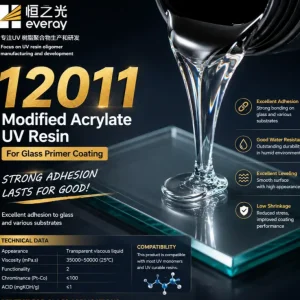
Discover additional modified epoxy acrylates, aromatic polyurethane acrylates, polyester acrylates, and active monomers engineered by EVER RAY.
Find authoritative answers regarding aliphatic urethane selection, curing kinetics, custom formulation, and direct wholesale ordering.
