Direct supply from Guangdong Ever Ray Environmental Material Co., Ltd. — Tailored for formulations requiring rapid crosslinking, exceptional hardness, and thermal resistance.
Strategic evaluation parameters for industrial formulators, procurement directors, and chemical supply chain managers seeking reliable B2B chemical sourcing.
Global formulators require uncompromising batch-to-batch repeatability. Epoxy acrylates and epoxide oligomers must possess tightly controlled epoxy values, acid values (<1 mg KOH/g), and narrow molecular weight distribution ($M_w/M_n$) to prevent drift in photo-cure kinetics and final glass transition temperatures ($T_g$).
With global mandates phasing out mercury lamp systems, wholesale epoxide resin procurement is pivoting aggressively toward LED-UV curable systems (365nm, 385nm, 395nm). Resins must overcome surface oxygen inhibition without releasing volatile organic compounds (VOCs) or toxic photoinitiator byproducts.
Beyond drum price, enterprise tier buyers calculate overall yield, reactive diluent requirement, resin viscosity lowering capacity, and line speed capabilities. Factory-direct procurement eliminates multi-tier distributor markups while securing custom synthesis capacity.
Understanding the molecular structures, crosslinking behavior, and mechanical balances of Bisphenol A Epoxy Acrylates, Aliphatic Polyurethane Hybrids, and Specialty Functional Oligomers.
| Resin Class | Key Chemical Architecture | Viscosity Range (mPa.s at 25°C) | Cure Speed & Hardness | Primary Industrial Application |
|---|---|---|---|---|
| Standard Bisphenol A Epoxy Acrylate | Bisphenol A Diglycidyl Ether (BADGE) + Acrylic Acid | 40,000 – 100,000 (Pure) / 500 – 3,000 (Diluted) | Fastest Surface Cure / High Pencil Hardness (3H–5H) | Wood primers, Overprint Varnishes (OPV), Metal packaging inks |
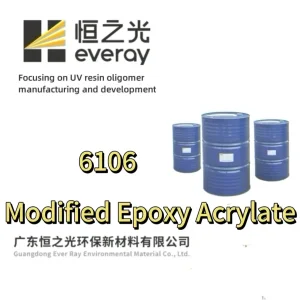
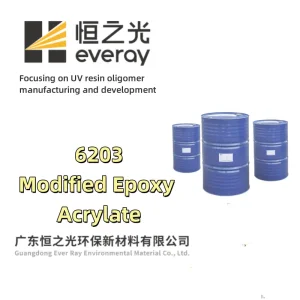
| Modified Epoxy Acrylate | Fatty acid or amine-modified epoxide backbone | 3,000 – 15,000 | Rapid Cure / Enhanced Flexibility & Adhesion | Plastic coatings (3C), flexo inks, matte wood coatings |
| Aliphatic Urethane Epoxide Hybrid | Isophorone Diisocyanate (IPDI) / Epoxy-Acrylate blend | 5,000 – 25,000 | Moderate Cure / Exceptional Weatherability (Non-yellowing) | Outdoor automotive clear coats, 3D printing, nail gel resins |
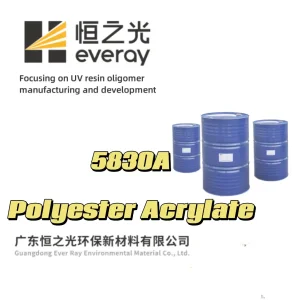
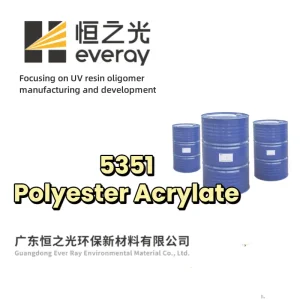
| Polyester Acrylate Oligomer | Saturated/Unsaturated Polyester backbone with acrylate ends | 500 – 8,000 | High Flexibility / Excellent Pigment Wetting | UV Offset Inks, Lithographic Inks, High-gloss varnishes |
Standard epoxy acrylates are synthesized via ring-opening addition polymerization of bisphenol A diglycidyl ether with acrylic acid in the presence of a quaternary ammonium or triphenylphosphine catalyst. The resultant secondary hydroxyl groups generated along the polymeric backbone impart outstanding interlayer adhesion and high surface energy.
However, pure bisphenol A epoxy acrylates exhibit ultra-high room-temperature viscosity and limited flexibility due to rigid aromatic rings. Modified variants (such as Grade 6106 and 6116) incorporate flexibilizing segments to eliminate brittleness while retaining fast curing kinetics under LED-UV sources.
Free-radical photopolymerization of epoxide-derived acrylates is inherently susceptible to atmospheric oxygen quenching, leading to sticky surface layers. To counter this, advanced formulations integrate active amine synergists or secondary amino-acrylate oligomers that consume dissolved peroxyl radicals through hydrogen abstraction.
Additionally, volume shrinkage during double-bond conversion ($C=C$ to $C-C$) induces internal stress, leading to substrate detachment. Low-shrinkage resins (such as Grade 73008 and 72017) address this via hyperbranched or dual-curing photothermal matrices.
Engineered formulations deployed across global consumer electronics, additive manufacturing, automotive coatings, and graphics packaging.
Modern mobile device housings, notebook panels, and wearable tech require UV vacuum electroplating primers and topcoats (e.g., Wholesale 7620 UV Resin). These resins offer extreme scratch resistance, boiled water immersion resistance (>2 hours at 100°C), and strong adhesion to polycarbonate (PC), ABS, and metal alloy substrates.
Stereolithography (SLA), Digital Light Processing (DLP), and LCD 3D printing demand low-viscosity, fast-reacting epoxide oligomers. Photo-thermal dual-curing resins (e.g., 72017A-8) enable additive manufacturing of highly elastic, tear-resistant midsoles, lattice structures, and industrial functional prototypes with minimal dimensional distortion.
Packaging converters producing food-safe labels, flexible films, and folding cartons utilize polyester acrylates (e.g., 5377A, 5336, 56031) for quick pigment wetting, excellent ink-water balance, lithographic stability, and rapid press speeds exceeding 300 meters per minute.
Strategic geographic analysis for B2B procurement leads navigating international chemical trade, regional compliance, and supply chain logistics.
As the world's primary manufacturing cluster for consumer electronics, automotive assembly, and furniture export, APAC leads in bulk consumption of epoxy acrylate oligomers. Procurement focuses heavily on high line speed, cost-effective modification, and immediate technical integration.
Demand in North America is driven by high-purity electronic packaging, optical adhesives, advanced additive manufacturing, and aerospace composites. Formulators require strict TSCA registration, low halogen content, and verifiable raw material origin traceability.
The European market is governed by rigorous sustainability mandates. EU buyers demand REACH-registered photopolymer resins, zero-VOC waterborne polyurethane acrylates, bio-based epoxide alternatives, and complete EuPIA compliance for packaging materials.
Ensuring seamlessly reliable supply chains from our Guangdong manufacturing hub to your international production line.
Every batch undergoes rigorous quality testing including GPC molecular weight evaluation, Brookfield viscosity profiling, Gardner color index testing, and FTIR structural verification.
Full regulatory compliance support provided with every shipment: Technical Data Sheets (TDS), Safety Data Sheets (SDS per GHS standards), Certificate of Analysis (COA), and REACH/RoHS statements.
Standard export packaging includes 20kg steel pails, 200kg iron drums, and 1000kg IBC totes with nitrogen blanketing to ensure extended shelf life and prevent moisture absorption during maritime transport.
In-house chemical engineering team offers custom modification of refractive index, functional acrylic density, flexibility, and viscosity to match client-specific curing lines.
Expert insights regarding procurement, chemical compatibility, formulation adjustments, and bulk ordering of epoxide resins.
Explore our fast-curing modified epoxies, water boiling resistant polyesters, and vacuum electroplating formulations.
Request technical datasheets, full product catalogs, or custom lab samples tailored to your target substrate and curing setup.
