Industrial Chemical Engineering Whitepaper

Wholesale Epoxy Curing Supplier & Product

Next-Generation UV Curable Epoxy Acrylates, Oligomers, and Advanced Photopolymer Curing Technologies for Global Formulators

High-Performance UV Oligomers & Epoxy Resins

Factory-direct wholesale solutions engineered for superior crosslinking density, rapid cure kinetics, and unmatched thermal-chemical resistance.
5830A High Hydroxyl Polyester Acrylate Resin

High-Quality 5830A High Hydroxyl Polyester Acrylate Resin for UV Coatings

View Technical Specs
Polyester Acrylate 5202B

Wholesale Polyester Acrylate 5202B – High-Performance UV Coatings Choice

View Technical Specs
Low viscosity 1262B

High-Quality Low Viscosity 1262B for PVC Floor Coating Applications

View Technical Specs
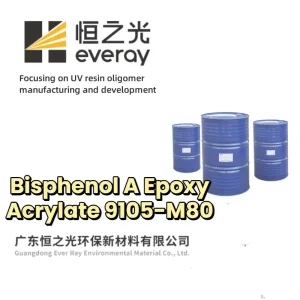
Bisphenol A Epoxy Acrylate Resin 9105M-80

Wholesale Bisphenol A Epoxy Acrylate Resin 9105M-80 Core UV Resin

View Technical Specs
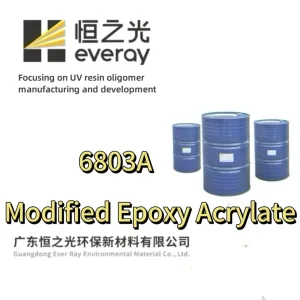
6803A Modified Epoxy Acrylate Resin

Wholesale 6803A Modified Epoxy Acrylate Resin High Gloss Fast Curing

View Technical Specs
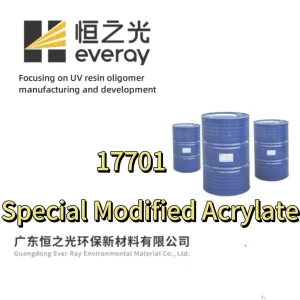
17701 Low Shrinkage Modified Acrylate

Buy 17701 Low Shrinkage Modified Acrylate Oligomer Resin for Offset Inks

View Technical Specs
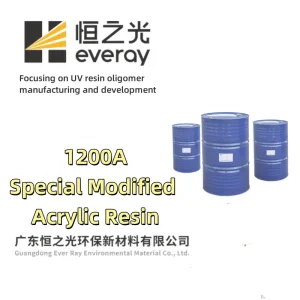
1200A UV resin

Buy 1200A UV Resin for Density-Board Primer & Metal Substrates

View Technical Specs
6200D UV-resin shadowless glue

Wholesale 6200D UV Resin in Shadowless Glue Systems & Adhesives

View Technical Specs
40,000+
Sqm Manufacturing Base
10+
Patents & Innovations
<0.5%
Volumetric Shrinkage Rate
100%
Global EHS Compliance

1. Executive Summary: The Industrial Evolution of Epoxy Curing Systems

In the modern landscape of advanced materials chemical manufacturing, the transition from conventional thermal epoxy curing mechanisms toward ultra-fast, photo-initiated UV curable epoxy acrylate oligomers represents one of the most significant paradigm shifts of the 21st century. Historically, two-component (2K) epoxy systems relied heavily on cycloaliphatic polyamines, polyamides, and acid anhydrides to achieve ring-opening crosslinking. While these systems yielded exceptional structural integrity and chemical resistance, their long thermal cure cycles, high thermal budgets, and substantial volatile organic compound (VOC) emissions imposed severe throughput bottlenecks on global industrial manufacturers.

Today, direct wholesale procurement of specialized epoxy curing resins—specifically Bisphenol-A epoxy acrylates, modified epoxy oligomers, and amine-functionalized cure accelerators—allows industrial formulators to achieve complete crosslinking within milliseconds upon exposure to ultraviolet (UV) or electron beam (EB) irradiation. As global regulations such as REACH, RoHS, and TSCA enforce strict lower limits on VOC emissions and hazardous air pollutants (HAPs), photopolymerizable epoxy acrylate systems have emerged as the foundational chemistry for high-speed protective coatings, optical clear adhesives, electronic packaging, micro-encapsulation, and offset graphic printing inks.

Key Technical Takeaway: Modern wholesale epoxy curing formulations combine the high glass transition temperature ($T_g$), tensile strength, and chemical resistance of traditional thermosetting epoxies with the ultrafast radical kinetics of acrylic ester functional groups, delivering an optimal balance of processing speed and mechanical durability.

Global Epoxy Curing Industry Development Trends

Key technological vectors reshaping global supply chains, manufacturing operations, and polymer formulation requirements.

LED-UV Curing Shift

Rapid migration from conventional medium-pressure mercury vapor lamps to monochromatic LED-UV systems (365nm, 385nm, 395nm). This requires epoxy resins and cure accelerators tailored for deep-layer polymerization under narrow spectral emissions without thermal surface degradation.

Ultra-Low Shrinkage Chemistry

Traditional acrylation induces volume shrinkage between 5% and 10%, creating internal stress and substrate delamination. Novel modified epoxy oligomers utilize ring-opening hybrid mechanisms or high-molecular-weight hyperbranched structures to maintain dimensional stability under 0.5% shrinkage.

Eco-Friendly Waterborne Systems

Surging demand for water-dilutable epoxy acrylate dispersions. These zero-VOC formulations enable low-viscosity application across porous wood, leather, and architectural substrates while completely eliminating hazardous monomer diluents like TPGDA or TMPTA.

3. Global Enterprise Procurement Needs & Supply Chain Optimization

For multinational chemical procurement directors and senior R&D managers, evaluating a wholesale epoxy curing supplier extends far beyond nominal pricing per kilogram. Industrial-scale manufacturing requires strict batch-to-batch consistency, raw material traceability, secure strategic reserves, and tailor-made physical properties (such as viscosity, color, acid value, and hydroxyl content).

Core Metrics in Wholesale Resin Procurement Evaluation:

  • Viscosity Consistency (mPa.s/25°C): Fluctuations in oligomer viscosity disrupt automated roller coating and spray lines, leading to film thickness variation. Leading manufacturers utilize continuous automated reactor monitoring to guarantee ±5% viscosity stability.
  • Color Gardner Index (≤ 1.0): For optical clear adhesives (OCA), 3C electronic finishes, and non-yellowing topcoats, low initial color and long-term resistance to thermal photo-oxidation are mandatory requirements.
  • Conversion Rate & Curing Energy Dose ($mJ/cm^2$): Lower energy thresholds for full double-bond conversion allow processing lines to run at higher line speeds, directly reducing factory energy expenditure and carbon footprints.
Chemical Class Typical Viscosity (25°C) Cure Speed Primary Application Area Key Advantage
Standard Bisphenol A Epoxy Acrylate 15,000 - 35,000 mPa.s Ultra-Fast (<100 mJ/cm²) Paper Overprint Varnish, Wood Primers Maximum hardness, high gloss, low cost
Modified Epoxy Acrylate Solution 2,000 - 8,000 mPa.s Fast Plastic Coatings, Offset Printing Inks Improved leveling, yellowing resistance
Polyurethane Acrylate (PUA) Hybrid 5,000 - 20,000 mPa.s Medium-Fast 3C Electronics, Automotive Interior Superior flexural toughness, weatherability
Low-Shrinkage Modified Acrylate 1,000 - 4,000 mPa.s Fast Film Inks, Substrate Bonding Adhesives Zero curling, exceptional adhesion to PET/PVC

Macro Industry Solutions Powered by Epoxy Curing Chemistry

Customized formulations resolving high-stress operational challenges across critical industrial sectors.

3C Electronics & Display Coatings

Consumer electronic housings demand extreme scratch resistance (pencil hardness ≥ 3H), sweat resistance, and non-yellowing characteristics. Modified aliphatic epoxy acrylates provide superior surface crosslinking density on PC, ABS, and PMMA substrates.

Industrial Wood & Floor Finishing

For high-traffic PVC floorings, SPC planks, and real wood furniture, high-solid epoxy acrylate sealers fill pores rapidly, sand smoothly, and resist boiling water, household chemicals, and mechanical abrasion.

Photopolymer 3D Printing Resins

SLA, DLP, and LCD additive manufacturing systems rely on low-viscosity, high-reactivity epoxy acrylates. These resins deliver accurate dimensional replication, high heat deflection temperatures (HDT), and ABS-like mechanical toughness.

5. Localized Support, EHS Compliance & Global Quality Assurance

Navigating global environmental regulations requires chemical suppliers to deliver comprehensive technical documentation alongside physical materials. Modern chemical manufacturing facilities must adhere strictly to ISO 9001 quality management systems and ISO 14001 environmental safety frameworks.

Regulatory Compliance & Technical Assurance Package:

  • Full REACH Registration: Ensuring uninterrupted supply across European Union member states with verified tonnage bands and hazard profiles.
  • RoHS & Heavy Metal Free: Complete absence of lead, cadmium, mercury, hexavalent chromium, PBBs, and PBDEs, making resins safe for electronic packaging.
  • TSCA & Global Inventories: Full inclusion in the United States TSCA inventory, as well as IECSC (China), ECL (Korea), and ENCS (Japan).
  • Technical Data Sheet (TDS) & Safety Data Sheet (SDS): Every shipment is backed by batch-specific Certificates of Analysis (COA) detailing exact viscosity, color, acid value, and density metrics.

6. Technical Roadmap & Future R&D Horizons

As industrial automation accelerates, next-generation epoxy curing technologies are focusing on smart dual-cure mechanisms, bio-based raw material integration, and advanced cationic polymerization. By combining free-radical acrylate polymerization with cationic epoxy ring-opening mechanisms, formulators eliminate oxygen inhibition while curing shadowed areas impervious to direct UV light.

R&D Breakthrough: Novel hyperbranched amine synergists reduce photoinitiator dosage by up to 30%, suppressing surface tacky layers caused by atmospheric oxygen inhibition while substantially lowering total formulation costs.

Advanced Functional Resins & Reactive Diluents

Targeted chemical solutions for multi-substrate adhesion, high elasticity, fast setting, and specialty printing inks.
High Solid Low Viscosity Modified Acrylate

Buy High Solid Low Viscosity Modified Acrylate Oligomer High Elasticity UV Resin

View Technical Specs
67283 Rapid-setting modified epoxy acrylate

Wholesale 67283 Rapid-Setting Yellowing-Resistant Modified Epoxy Acrylate

View Technical Specs
5450 UV resin

Wholesale 5450 UV Resin for UV Coating, Paper Varnish & Screen Creeping

View Technical Specs
A150 UV resin

High-Quality A150 UV-Resin for High Performance UV Ink & Coatings

View Technical Specs
5103 polyester acrylate UV resin

High-Quality Fast-Reacting 5103 Polyester Acrylate UV Resin for Plastic

View Technical Specs
72021E UV-resin for Bonding

Wholesale 72021E UV-Resin for Multi-Substrate Bonding Systems

View Technical Specs
7913 Polyurethane Acrylate UV Resin

Wholesale 7913 High Reactivity Anti-Fouling Polyurethane Acrylate Resin

View Technical Specs
61003A UV resin in UV plastic film

Wholesale 61003A UV Resin in UV Plastic-Film Varnish & LED Packaging

View Technical Specs

Frequently Asked Questions for Chemical Engineers

In-depth technical responses regarding wholesale procurement, synthesis, and application troubleshooting.

What is the primary difference between Bisphenol A Epoxy Acrylate and Urethane Acrylate?
Bisphenol A Epoxy Acrylate (such as grade 9105M-80) features a rigid aromatic backbone offering maximum cure speed, extreme surface hardness, and high chemical resistance at a lower price point. Urethane Acrylates (PUA) incorporate flexible carbamate linkages, delivering superior outdoor weatherability, non-yellowing characteristics, and extreme impact toughness at a higher material cost.
How can formulators mitigate surface sticky layers caused by oxygen inhibition?
Oxygen inhibition can be overcome by incorporating active amine synergists or amino acrylate oligomers into the formulation. Amine hydrogen atoms react rapidly with peroxyl radicals ($ROO^\bullet$), scavenging dissolved oxygen and regenerating active alkyl radicals to ensure complete surface tack-free curing under atmospheric air.
What modified epoxy oligomer grade is recommended for non-curling film coatings?
Grade 17701 Low Shrinkage Modified Acrylate is specially designed for thin plastic film substrates (BOPP, PET, PVC). Its low volumetric polymerization contraction prevents substrate distortion, edge curling, and micro-cracking while maintaining strong interfacial adhesion.
Are wholesale shipments available in customized drum packaging?
Yes. Industrial wholesale orders are supplied in standard 200kg steel drums, 20kg HDPE pails, or 1000kg IBC totes. Light-proof, UV-inhibited packaging ensures a minimum stable shelf-life of 12 months when stored below 30°C in dark, dry warehouse conditions.
Can EVER RAY provide custom monomer dilution or viscosity modification?
Our state-of-the-art chemical synthesis lab and 40,000 sqm production center can tailor oligomer viscosity, monomer cut ratio (e.g., cut with HDDA, TPGDA, or TMPTA), and functional group density to match specific customer application machinery and target performance profiles.