Explore our top-tier polymer formulations engineered for thermal durability, radical photopolymerization, zero-yellowing, and chemical resistance.
Analyzing market dynamics, shift toward radiation-cured polymer chemistry, and the macroeconomic expansion of high-grade thermosets.
The global epoxy material market has entered a transformative era driven by industrial automation, green building regulations, electronic miniaturization, and the rapid shift toward sustainable manufacturing processes. Thermosetting polymers—specifically epoxy resins, epoxy acrylates, and urethane-modified hybrid matrices—serve as the foundational backbone for high-performance coatings, structural adhesives, electronic encapsulants, and composite laminates worldwide.
As international supply chains evolve to balance cost efficiency with operational resilience, procurement executives and formula chemists require direct access to reliable wholesale epoxy material manufacturers and suppliers capable of delivering precise chemical equivalence, consistent batch viscosity, low Epoxide Equivalent Weight (EEW) tolerance, and stable radiation-curing response.
High-tensile epoxy composite systems and UV-curable protective topcoats reduce structural weight while maintaining crash energy absorption, flame retardancy, and extreme thermal tolerance across electric vehicle (EV) battery packs and airframe structures.
Ultrapure bisphenol-A and novolac epoxy derivatives engineered with sub-micron silica fillers provide essential dielectric protection, low moisture absorption, and minimal linear thermal expansion (CTE) for microprocessors, printed circuit boards (PCBs), and display panels.
Self-leveling epoxy flooring compounds, concrete injection resins, and zero-VOC waterborne epoxy dispersions protect civil infrastructure against chemical corrosion, mechanical abrasion, and environmental weathering.
Understanding molecular stoichiometry, acrylic functionalization, and performance tuning for high-end applications.
At the chemical level, standard epoxy materials originate from the condensation reaction of epichlorohydrin with bisphenol-A (forming DGEBA) or bisphenol-F, yielding prepolymers rich in oxirane rings. To meet the stringent demands of high-speed industrial processing, chemical synthesis engineers modify these prepolymers into specialized acrylates and polyurethanes.
By reacting liquid epoxy resins with acrylic acid in the presence of triphenylphosphine (TPP) or quaternary ammonium catalysts at controlled temperatures (95°C – 105°C), the oxirane rings open to introduce terminal vinyl groups ($\text{CH}_2=\text{CH-COO-}$). This modification transforms slow thermal-curing epoxies into ultra-fast radical UV-curable oligomers while retaining the intrinsic glass transition temperature ($T_g$), chemical inertness, and superior substrate adhesion of the aromatic epoxy core.
| Oligomer Backbone Type | Cure Mechanism | Tensile Hardness (Pencil) | Flexibility & Elongation | Yellowing Resistance | Primary Application Target |
|---|---|---|---|---|---|
| Standard Bisphenol A Epoxy Acrylate | Free Radical UV / EB | 4H - 6H | Low (< 3%) | Moderate to Fair | Wood Overprint Varnishes, Paper Coatings, Printing Inks |
| Modified Epoxy Acrylate (e.g., 6160M-3) | Fast Radical Curing | 3H - 5H | Medium (5% - 12%) | Good | Metal Packaging, High-Speed Plastic Coating Lines |
| Aliphatic Polyurethane Acrylate | Radical UV Curing | 2H - 4H | High (20% - 150%) | Excellent (Non-Yellowing) | Automotive 3C Finish, Outdoor Architectural Film, Nail Gels |
| Pure Acrylate / Low-Shrinkage Resin | Dual / Radical UV | 2H - 3H | High (15% - 45%) | Excellent | Optical Adhesives (LOCA), Electronic Potting, 3D Printing |
Unlocking unprecedented economic efficiency, scalable production capacity, and rigid quality control through integrated chemical clusters.
Situated in China's primary specialty chemical production corridors (such as Guangdong and Jiangsu), direct access to key feedstocks—epichlorohydrin, acrylic acid, TDI/IPDI, and polyols—eliminates raw material supply bottlenecks and reduces intermediate transportation overheads.
Modern production facilities utilize continuous DCS (Distributed Control System) reactor automation. Temperature ramp profiles, monomer dosing rates, and acid value neutralization steps are monitored in real time, assuring lot-to-lot color stability (Gardner < 1) and reproducible viscosity profiles.
With immediate proximity to major international container ports (Guangdong/Shenzhen/Nansha), bulk chemical shipments—ranging from 200kg steel drums and 1000kg IBC totes to ISO tank containers—are dispatched seamlessly with full GHS, REACH, SDS, and IMO dangerous-goods compliance.
How specialized epoxy materials solve specific performance bottlenecks across diverse global manufacturing sectors.
High-end consumer cosmetic packaging and automotive trim demand mirror-like metallic luster via aluminum physical vapor deposition (PVD). Traditional coatings often suffer from poor inter-layer adhesion or outgassing defects under vacuum.
Sensitive circuit board assemblies, LED sensors, and automotive power electronics require electrical insulation combined with rapid room-temperature or UV fixing to prevent thermal damage during assembly.
SLA, DLP, and LCD 3D printing systems demand resins with fast layer cure speeds, minimal liquid viscosity, and structural mechanics capable of replacing molded ABS or flexible elastomers.
Commercial packaging presses operate at high linear speeds, requiring inks that cure instantly under mercury or LED-UV lamps without surface tackiness or oxygen inhibition.
Emerging innovations redefining high-performance resin manufacturing over the next decade.
Conventional medium-pressure mercury lamps generate high thermal heat and ozone emissions. The chemical industry is rapidly shifting toward energy-efficient LED-UV curing systems. This transition requires oligomers with modified absorption spectra and enhanced surface cure response to combat atmospheric oxygen inhibition without relying on toxic photoinitiators.
With stringent global environmental mandates (such as the EU Green Deal), research efforts are accelerating the synthesis of bio-based epoxies derived from cashew nut shell liquid (CNSL), lignin, and epoxidized vegetable oils. Furthermore, dynamic covalent chemistry (vitrimers) is being incorporated into epoxy matrices to enable post-cure recycling and thermal reshaping.
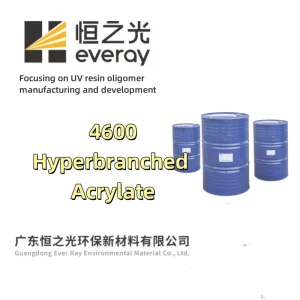
As seen in Scratch-Resistant 4600 Hyperbranched Acrylic UV Resin, highly branched molecular trees provide an abundance of reactive end-groups per unit volume while maintaining surprisingly low solution viscosity. This enables zero-VOC formulations with exceptional pencil hardness (6H+), scratch resistance, and minimal film shrinkage.
Key evaluation criteria for procurement directors and chemical formulation leaders when selecting a primary manufacturer.
Sourcing raw materials for large-scale industrial manufacturing requires rigorous vendor qualification to eliminate production downtime, quality variance, and legal compliance risks. Below is the standard protocol utilized by top-tier global chemical firms when auditing an epoxy material supplier:
Every delivery drum must be backed by a Certificate of Analysis (COA) detailing mandatory analytical metrics:
A trustworthy wholesale manufacturer provides instant access to comprehensive safety and environmental compliance data:
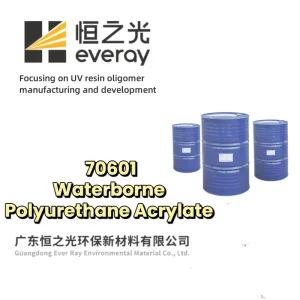
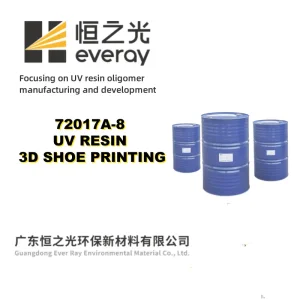
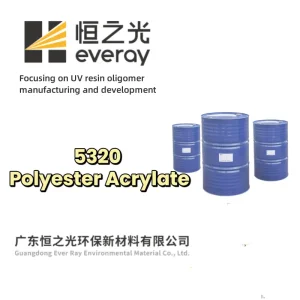
Discover targeted resins engineered for waterborne systems, dual-cure footwear, hyperbranched scratch protection, and specialty inks.
Direct answers to common technical queries regarding wholesale resin selection, customization, and logistics.
