Explore our top wholesale UV curable resins engineered for extreme durability, non-yellowing aesthetics, and eco-compliant industrial applications.
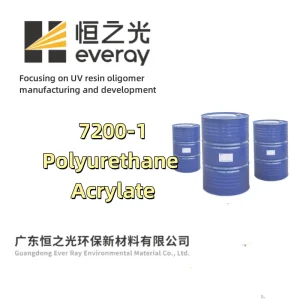
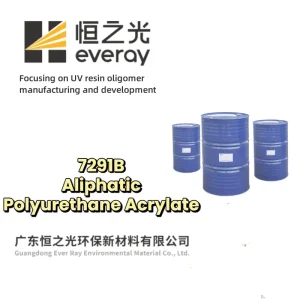
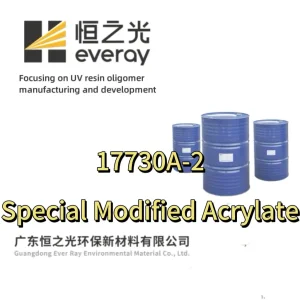
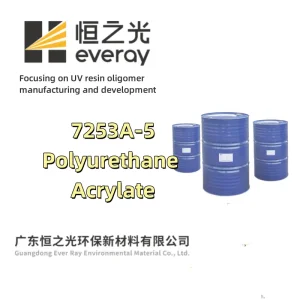
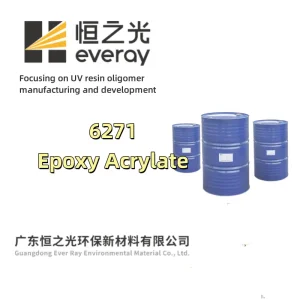
Transitioning from legacy Bisphenol-A (BPA) chemistry to modern zero-VOC, ultra-low irritation photo-curable oligomer systems.
In the global chemical manufacturing landscape, traditional epoxy resins derived from Bisphenol-A (BPA) and epichlorohydrin have historically dominated structural bonding, industrial coatings, and composite matrixes. However, modern environmental regulations—such as EU REACH Annex XVII, California Proposition 65, and global indoor air quality standards (LEED v4)—have fundamentally shifted enterprise procurement criteria. Today's commercial formulators require Wholesale Non-Toxic Epoxy Resin Products that eliminate volatile organic compounds (VOCs), endocrine-disrupting chemicals, and toxic residual monomers without compromising mechanical shear strength or thermal endurance.
At Guangdong Ever Ray Environmental Material Co., Ltd., our R&D team has engineered a new paradigm of UV/EB curable acrylate oligomers, aliphatic urethane acrylates, and cycloaliphatic modified epoxy acrylate resins. By substituting toxic aromatic ring backbones with bio-derived or cycloaliphatic ester structures, we achieve complete free-radical polymerization under ultraviolet radiation in fractions of a second. This process yields zero hazardous air pollutants (HAPs) and eliminates the thermal curing phase that historically emitted amine hardener fumes.
| Technical Property | Legacy Bisphenol-A Epoxy Systems | Ever Ray Eco-Friendly UV Epoxy Acrylates |
|---|---|---|
| Toxicity Profile | High (Contains BPA, epichlorohydrin residues) | Non-Toxic / Non-BPA / Low Skin Irritation |
| Curing Mechanism | Thermal amine hardener (24–72 hours) | Instant UV/LED photo-cure (0.5–3 seconds) |
| VOC Emissions | Moderate to High (Solvent diluted) | Zero VOC / 100% Solid Content |
| Yellowing Resistance | Poor (Aromatic backbone yellows quickly) | Exceptional (Aliphatic & modified acrylates) |
| Regulatory Status | Restricted in food contact & toys | FDA 21 CFR 175.300 & RoHS 3.0 Compliant |
Continuous innovation in bio-based oligomers, hyperbranched macromolecular structures, and dual-cure photo-thermal chemistry.
Synthesizing oligomers from renewable feedstocks such as cardanol (cashew nut shell liquid), modified soybean oil, and lignin derivative polyols, reducing carbon footprint by up to 45% compared to petroleum basestocks.
Engineered globular polymeric architectures providing extremely low viscosity without reactive diluent monomers. Eliminates skin irritation potential while boosting cure speed and surface scratch resistance.
Pioneering hybrid resin systems (such as Grade 72017) combining immediate light-curing surface setting with secondary moisture or thermal shadow-curing for complex 3D geometries and opaque sub-layers.
Tailored resin grade formulations engineered to meet rigorous performance standards across high-growth global industries.
Non-toxic skin-contact safe UV coatings for smartphone housings, smartwatches, and wireless earbuds. Delivers 4H+ pencil hardness, anti-fingerprint properties, and robust alcohol rub resistance on PC, ABS, and PMMA substrates.
Dual-curing resins (such as 72017A-8) crafted for elastomeric 3D printed midsoles and functional prototyping. Offers exceptional tear strength, energy return (>65%), low volume shrinkage, and zero skin-sensitizing residues.
Low-viscosity epoxy acrylates (such as Grade 6116) designed for roll-coated UV furniture varnishes and SPC flooring. Eliminates formaldehyde and solvent odors while providing deep matte finishes and micro-scratch protection.
Special modified acrylates (such as 17730A-2) providing boil-water resistance and optical clarity for glass containers, touch panels, and decorative architectural glass without toxic silane coupling additives.
High-purity amino acrylate synergists and oligomers engineered for indirect food contact packaging inks and overprint varnishes, minimizing extractable substances and complying with Nestle guidance lists.
Rapid UV-curing adhesives with near-zero volumetric shrinkage stress. Ideal for bonding delicate medical diagnostic cartridges, optical lens assemblies, and precision glass-to-metal joints.
Inside Guangdong Ever Ray's 40,000 m² state-of-the-art chemical synthesis park in Yunfu, Guangdong.
In an era of global supply chain volatility, enterprise buyers demand chemical suppliers who offer absolute batch-to-batch consistency, scale, and environmental compliance. Established in 2006, Guangdong Ever Ray Environmental Material Co., Ltd. operates a modernized production complex in Dawan Industrial Park, Yunfu, Guangdong, complemented by an international sales headquarters in Jiangmen.
Empowering international brands with certified safety data and localized technical application engineering.
We provide GHS-compliant 16-section Safety Data Sheets (SDS) in multi-language formats alongside detailed Technical Data Sheets (TDS) covering recommended UV curing dosage, photoinitiator selection, and substrate pretreatment guidelines.
Our non-toxic resin portfolio undergoes rigorous third-party testing (SGS/TÜV) ensuring zero presence of SVHC (Substances of Very High Concern), heavy metals, phthalates, or halogenated compounds under EU RoHS directive 2015/863.
Our senior polymer chemists collaborate directly with overseas procurement and R&D teams to modify functional group density, refractive index, surface tension, and viscosity matching your specific lamp spectra (Hg vs. LED 365–405nm).
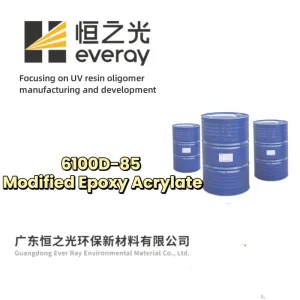
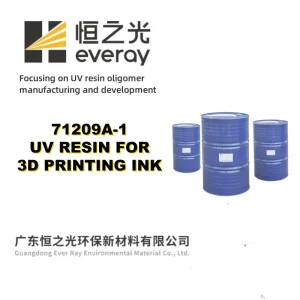
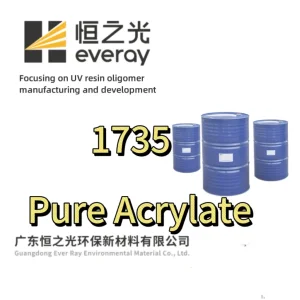
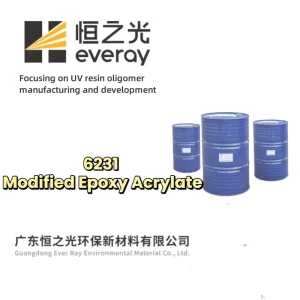
Explore our specialized photo-curable formulations for packaging films, metal vacuum plating, 3D printing engineering plastics, and high-adhesion primers.
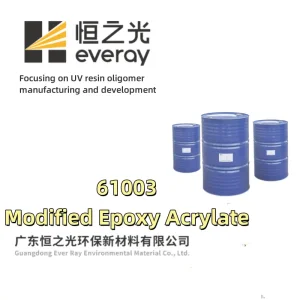
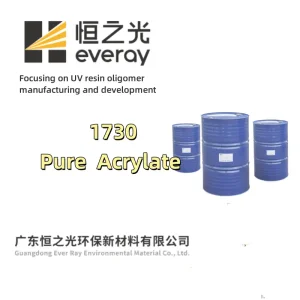
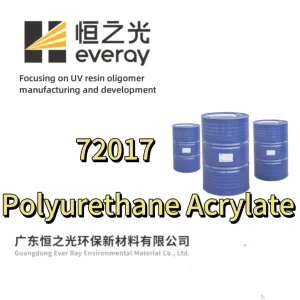
In-depth chemical technical answers addressing safety, non-toxicity, performance tuning, and global wholesale logistics.
In industrial coatings and photopolymers, "Non-Toxic" denotes resins that eliminate Bisphenol-A (BPA), heavy metal catalysts, aromatic amine hardeners, and free toxic epichlorohydrin. Modern non-toxic epoxy acrylates utilize cycloaliphatic or aliphatic modified backbones cured instantly via ultraviolet photo-initiation. This 100% solid process converts monomers into an inert crosslinked polymer matrix without releasing Volatile Organic Compounds (VOCs) or toxic off-gassing.
While traditional two-part epoxies rely on slow polycondensation, Ever Ray's modified epoxy acrylates achieve equivalent or superior tensile strength (up to 65 MPa) and scratch resistance (4H–6H pencil hardness) within seconds under UV radiation. The acrylate modification imparts greater elasticity and impact resistance, drastically reducing brittle fracturing without sacrificing chemical or water immersion resistance.
Yes. Our R&D application laboratory routinely formulates custom resin grades tailored to specific LED wavelength outputs (365nm, 385nm, 395nm, 405nm) or conventional high-pressure mercury lamps. We adjust functional group density and add specialized amino acrylate synergists (such as our Active Amine series) to overcome oxygen inhibition and ensure complete surface cure at low energy doses.
Every wholesale order is accompanied by a batch-specific Certificate of Analysis (COA), 16-section GHS-compliant Safety Data Sheets (SDS), and detailed Technical Data Sheets (TDS). On request, we provide third-party analytical certification confirming EU REACH registration status, RoHS 3.0 compliance, halogen-free status, and FDA 21 CFR 175.300 indirect food contact suitability.
When stored in original sealed light-blocking steel drums or opaque HDPE containers at temperatures between 15°C and 25°C, away from direct sunlight and heat sources, Ever Ray UV resins maintain full reactivity and stable viscosity for a minimum of 12 months from the date of synthesis.