Below are four of our primary flagship special functional acrylate oligomers engineered specifically for high-durability coatings, inks, and surface treatment applications across the Polish industrial sector.
Poland has firmly established itself as the beating heart of industrial manufacturing within Central Eastern Europe (CEE). Driven by strategic geographic positioning, a highly skilled engineering workforce, and massive infrastructure investments, Poland serves as a primary manufacturing nexus for automotive components, premium furniture, resilient vinyl flooring (LVT/PVC), flexographic packaging, and 3C consumer electronics. As European environmental mandates—such as the EU Green Deal, REACH authorization standards, and strict Volatile Organic Compound (VOC) caps—tighten across the bloc, Polish industrial chemical formulators are under intense pressure to replace traditional solvent-based systems with advanced energy-curable photopolymers.
At the epicenter of this technological transition is the demand for Special Functional Acrylate Oligomers. Unlike standard epoxy acrylates or unmodified polyester resins, special functional oligomers are custom-synthesized macromolecular structures engineered to solve specific chemical and physical boundary conditions: achieving optical clarity on untreated plastic substrates, providing boiling-water adhesion on glass, delivering micro-scratch resistance for heavy-traffic floor tiles, or eliminating oxygen inhibition under high-speed UV-LED curing lines.
Polish formulators in industrial centers like Katowice, Warsaw, Poznań, and Wrocław require resin suppliers who offer more than just commodity raw materials. They demand rigorous batch-to-batch consistency, full regulatory documentation (REACH compliance), and direct access to chemical synthesis expertise capable of tailoring resin functionality to bespoke production parameters.
In radiation curing science, the oligomer forms the structural backbone of the cured polymer matrix, contributing 50% to 80% of the ultimate physical properties. Special functional acrylate oligomers depart from standard aliphatic urethane or epoxy acrylate chemistry through intentional molecular modification, hyperbranching, or multi-functional side-chain grafting.
By incorporating acidic phosphate ester groups into the oligomeric backbone, these resins exhibit exceptional thermodynamic adhesion to polar inorganic substrates, including unprimed glass, aluminum, stainless steel, and galvanised zinc. The phosphate groups form strong chelation bonds with metal oxides, preventing moisture ingress and delamination.
Grafting perfluoroalkyl chains or polydimethylsiloxane (PDMS) segments onto acrylate oligomers lowers surface tension to as low as 18–22 mN/m. During application, these hydrophobic segments migrate to the air-coating interface, endowing cured surfaces with stain resistance, anti-fingerprint properties, hydrophobic water angles (>105°), and slip resistance.
Featuring 3D globular architectures with high acrylate functionality (6 to 16 reactive sites per molecule) alongside low intrinsic solution viscosity. This topology facilitates rapid crosslinking density under lower UV doses (ideal for high-speed printing lines) while maintaining low volumetric shrinkage and high pencil hardness (3H–5H).
| Oligomer Class | Viscosity (mPa.s @ 25°C) | Cure Speed (m/min) | Volumetric Shrinkage | Primary Polish Application |
|---|---|---|---|---|
| Acid-Functional Acrylate | 15,000 – 45,000 | 25 – 40 | < 2.5% | Glass primers, metal coil coatings, mirror backing |
| Silicone/Fluorine Modified | 1,200 – 5,000 | 35 – 60 | < 3.0% | Anti-fouling topcoats for LVT flooring, 3C screen covers |
| Hyperbranched Polyol Acrylate | 800 – 3,500 | 80 – 120+ | < 1.8% | High-speed UV packaging inks, barrier overprint varnishes |
| Low-Viscosity Modified Epoxy Acrylate | 2,000 – 8,000 | 40 – 70 | < 3.5% | Wood sanding sealers, industrial PVC floor primers |
For chemical formulators in Poland, balancing premium technical performance with unit economic competitiveness is a constant operational challenge. Sourcing special functional acrylate oligomers directly from established Chinese chemical manufacturers like Guangdong Ever Ray Environmental Material Co., Ltd. (EVER RAY) provides a decisive structural market advantage.
Guangdong Ever Ray operates out of a state-of-the-art 40,000+ m² chemical synthesis base in Yunfu, Guangdong. By directly sourcing basic petrochemical building blocks—such as Acrylic Acid, Isophorone Diisocyanate (IPDI), Hexamethylene Diisocyanate (HDI), and specialty polyols—in multi-thousand-ton lots, EVER RAY insulates European formulators from volatile regional raw material surcharges.
With over 10 invention and utility patents, EVER RAY’s R&D laboratory utilizes advanced Gel Permeation Chromatography (GPC) and Gas Chromatography-Mass Spectrometry (GC-MS) to control molecular weight distributions tightly. This guarantees that every drum shipped to Poland delivers identical viscosity, reactivity, and color (Gardner <1).
Equipped to handle international bulk logistics, offering supply in 200kg steel drums, 1000kg IBC totes, and ISO-tank flexitanks. Complete regulatory technical dossiers—including REACH pre-registrations, Safety Data Sheets (SDS) in Polish/English, and Certificates of Analysis (COA)—are provided for frictionless customs clearance at Gdynia or Hamburg ports.
To maximize the tangible utility of special functional acrylate oligomers, formulators must map material selection directly to regional industrial applications. Below are four key manufacturing scenarios in Poland where specialized oligomer chemistry solves acute production bottlenecks.
Silesia is home to major flooring production clusters. Modern Luxury Vinyl Tile (LVT) requires a high-performance UV topcoat that withstands micro-scratches from foot traffic, resists household chemical staining, and exhibits minimal curl (low shrinkage). Sourcing low-viscosity, high-functionality modified acrylates (such as 1262B and 1290H) allows formulators to create 100% solids roller-applied topcoats. The low volumetric shrinkage (<2%) eliminates tile warping during rapid UV curing, while fluoro-silicone modification provides exceptional stain release against shoe scuffs and coffee spills.
The Mazovian province is CEE's printing capital, serving food, pharmaceutical, and consumer goods packaging. Commercial printing presses run at speeds exceeding 300 meters per minute under UV-LED curing lamps (365nm/395nm wavelength). Standard resins suffer from surface tackiness due to oxygen inhibition. Incorporating hyperbranched oligomers and amino-functional acrylate resins drastically boosts reactivity, lowers ink viscosity for superior pigment wetting (carbon black and phthalocyanine blue), and delivers low-odor, low-migration properties compliant with European food contact guidance.
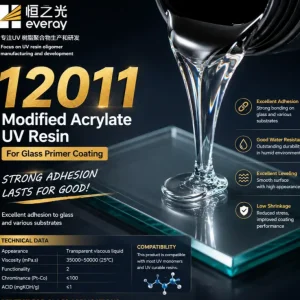
Greater Poland’s automotive supply chain manufactures specialized glass windshields, sunroof modules, and digital cockpit displays. Glass substrates present extreme adhesion challenges under environmental cycling (humidity, UV exposure, and freeze-thaw tests). Utilizing phosphoric acid-functionalized acrylates (such as 12011 and 17730A-2) provides direct chemical bonding to silica hydroxyl groups. Formulations pass stringent 100°C boiling-water immersion tests for over 72 hours without loss of adhesion or optical yellowing.
Kraków’s booming hardware startup and industrial prototyping ecosystem relies on UV photopolymer resins for SLA, DLP, and LCD 3D printing. Traditional acrylic resins result in brittle printed parts with dimensional warping. Specially modified elastic and low-shrinkage urethane acrylate oligomers impart high tensile strength (>45 MPa) alongside impressive elongation at break (>35%), enabling the production of functional engineering prototypes, flexible shoe midsoles, and durable snap-fit enclosures.
Migrating from local distribution channels to direct factory-direct partnerships with Chinese producers requires a structured qualification protocol. To ensure seamless technical validation and supply continuity, EVER RAY recommends a four-step procurement framework:
Define target viscosity (mPa.s), curing light spectrum (Mercury arc vs. 395nm LED), substrate dynamic (PVC, PET, Metal, Glass), and required physical criteria (Pencil Hardness, MEK Rub Resistance, Impact Strength).
Receive 1kg to 5kg lab samples dispatched via express courier directly to your Polish R&D laboratory, complete with Certificate of Analysis (COA), Safety Data Sheets (SDS), and starting formulation guidelines.
Run pilot-scale production batches to verify line speed compatibility, viscosity stability under shear, pot life, and surface cure characteristics under ambient oxygen conditions.
Connect directly with EVER RAY’s senior application engineers to request technical data packages, custom oligomeric modifications, or express lab samples for evaluation in Poland.
The European energy-curable coatings industry is undergoing three profound technological shifts that will dictate resin chemistry over the coming decade:
1. Complete Transition to LED-UV (365nm / 395nm): Traditional medium-pressure mercury lamps are being phased out due to energy costs and mercury disposal regulations under Minamata Convention guidelines. Special functional acrylate oligomers must be engineered with higher photo-reactivity to match the monochromatic, narrow-band output of energy-efficient LED curing systems.
2. Sustainable & Bio-Based Carbon Content: European OEMs are increasingly requesting coatings with verified bio-based carbon content. Future special functional oligomers incorporate bio-derived polyols (castor oil, succinic acid, bio-propanediol) to lower product carbon footprints (PCF) without compromising glass transition temperatures ($T_g$) or abrasion resistance.
3. Waterborne UV Polyurethane Dispersions (PUDs): Combining the low application viscosity of waterborne coatings with the instantaneous cure speed and chemical resistance of UV chemistry. Waterborne PUD oligomers are becoming the premier choice for luxury automotive wood trim and sustainable leather finishing across Central Europe.
Explore our complete extended range of specialty modified acrylates, epoxy resins, and polyester oligomers tailored for demanding industrial coatings, offset inks, and substrate bonding in the Polish market.
Find concise, technical answers to common questions asked by Polish chemical formulators and procurement managers when qualifying special functional acrylate oligomers from China.
Standard epoxy or urethane acrylates focus primarily on core mechanical properties like hardness or flexibility. Special functional acrylate oligomers incorporate targeted chemical modifications—such as acidic phosphate esters for metal/glass adhesion, fluorine/silicone segments for hydrophobic stain resistance, or hyperbranched structures for ultra-fast surface cure and low shrinkage (<2%).
EVER RAY ensures all chemical monomers and synthetic precursors used in our acrylate oligomers are compliant with EU REACH regulations. We work closely with European Only Representatives (OR) to provide pre-registration numbers, full SDS safety dossiers in compliance with CLP regulations, and technical support for seamless importation into Gdynia or other EU entry ports.
For demanding outdoor weatherability and UV sunlight exposure without yellowing, aliphatic polyurethane acrylate oligomers synthesized with Isophorone Diisocyanate (IPDI) or Hexamethylene Diisocyanate (HDI) are required. Grade 17730A-2 and our aliphatic PUA series provide superior QUV weatherometer stability, maintaining gloss retention and clarity over extended service lives.
Yes. With our in-house synthetic reactor lines and R&D team, we can adjust oligomer molecular weight, reactive monomer diluent ratio (e.g., cut with TPGDA, TMPTA, or HDDA), and viscosity ranges from 500 mPa.s up to 100,000 mPa.s at 25°C to perfectly match your application equipment.
Standard packaging includes 200kg steel drums and 1000kg IBC totes. Production lead times typically range from 7 to 10 working days. Ocean freight shipping from Shenzhen/Nansha ports to Hamburg or Gdynia takes approximately 28 to 35 days, with express air freight available for urgent evaluation samples.
Glass surfaces contain abundant hydrophilic silanol ($Si-OH$) groups. Phosphoric acid functionalized acrylate oligomers form stable ionic and hydrogen bonds with these surface hydroxyls, displacing adsorbed moisture. This molecular anchoring mechanism prevents inter-facial delamination even when subjected to boiling water testing (e.g., Grade 12011).
During free-radical polymerization, acrylate double bonds convert to single covalent bonds, reducing intermolecular distance and creating internal volumetric strain. By incorporating flexible soft segments or hyperbranched structures into oligomer backbones (such as 1290H), volume shrinkage is constrained to under 2%, preventing flexible PVC backing tiles from curling or warping during high-speed UV cure.
Formulators can contact our team directly via the online inquiry button or email us at [email protected]. Please specify your target application, coating substrate, curing equipment, and key technical performance parameters. Lab samples (1kg–5kg) are prepared and dispatched via DHL/FedEx within 48 hours.
Leverage our 18+ years of photopolymer R&D, backward-integrated chemical manufacturing, and technical support to elevate your product performance in the Polish market.
Send Inquiry Now